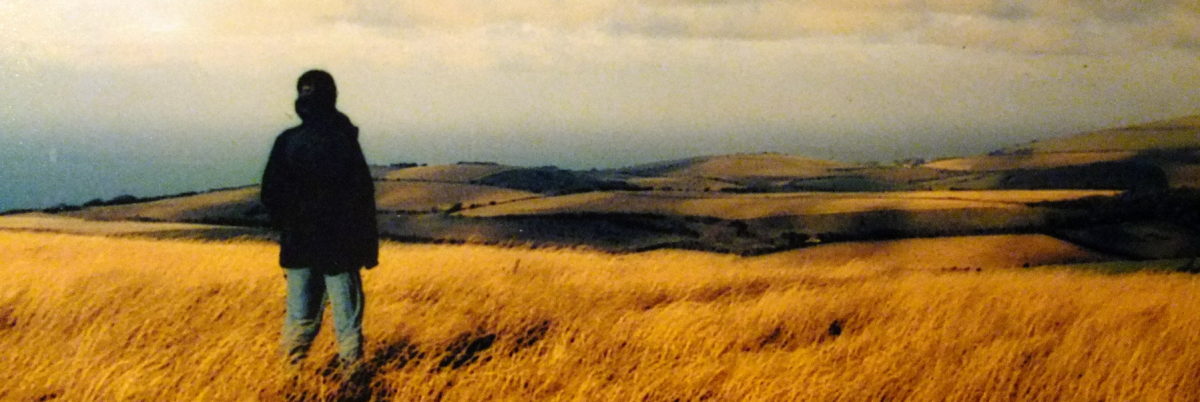

Many years ago, my daughter Alisa spent a summer doing research high in the Colorado Rockies. I visited her there, and one day she suggested we hike up to her ‘laboratory’, the tundra. There, high above the tree line, where only small animals and smaller plants survived the winter snow and wind, she collected soil and water samples to test for contaminants.
It was beautiful on top of the world. The blue sky stretched above us, and the pine forests we had hiked through lay at our feet. We had passed old snow drifts in protected gullies as we hiked up, and here we could see peaks still clothed in white. The sun shone brightly but a cold wind blew, and I was glad for my jacket.
As we climbed, I had paused to catch my breath and, looking around, had been awed by the thousands of wild flowers everywhere. I saw there were just as many here on this rocky slope. Tinier and more delicate, they hugged the ground, avoiding the cold wind striking taller beings like myself. They were the tundra survivors. With roots stretching deep into this rocky soil, these miniature plants had learned how to live in an environment with an eight week growing season.
Suddenly I noticed a familiar backyard plant. It looked just like a clover. It WAS a clover, complete with a pinkish blossom! “Look, Lis,” I cried, “Here’s an ordinary clover.”
“No, Mom,” she responded. “Not an ordinary clover. Alpine clovers like this tiny plant may be a century old. They grow so slowly and their winters are so long that they live undisturbed a long time.”
I was taken aback. I peered more respectfully at this plant with its familiar three-lobed leaves. Just a clover, and it was here before I was born and would most likely continue after I was dead. I knew the towering lodgepole pines had long lives, and the mountains, of course, made my lifetime as brief as that of my garden vegetables. But I didn’t expect to be ephemeral around clover plants! It was humbling knowledge.
Many, many years ago, someone looked out at a night sky studded with stars or up at the mountains in their giant immovability or perhaps at a tiny long-lived plant, and he cried passionately: What are humans, O God, that you should be mindful of them? What are mortals that you care for them? He went on to declare that God had made humans just a little lower than the angels and “crowned them with glory and honor.”
We read in the Psalms of his awe at the mighty creations he saw around him. We can read, too, of his mystification at his place in the scheme of things. I share both his awe and his mystification. How indeed could such an ephemeral creature as a human being matter to God? Especially in a world of hundred year old clovers!
There is a story of a doctor in a poor, isolated area who was tenderly trying to feed a baby was not expected to live. When the baby died, someone asked her, “What worth was this baby? How did his helpless, brief existence matter at all?” The doctor looked up in silence, and then she answered, “He had the power to stir me to love.”
I still don’t know why we transient humans matter in a world where we live briefly and trees, mountains, and clovers live so long. But I do know that we have the power to stir God to love — us. In spite of our brief and helpless existence, the love of the Creator of the whole universe is poured onto us.
What are humans, O God, that you should be mindful of them? What are humans that you should pour out your love on us? It was a mystery to the Psalmist, and it still mystifies us today.
Perhaps love is always a mystery. We know so well our weaknesses and ugly places that we can’t understand how we can be wholly, unconditionally loved. We know children need unconditional love but forget that adults need it, too.
And God’s love is wholly unconditional. When you’re loved by God, that love is freely, lavishly distributed – with no strings attached. It not only doesn’t matter how long I live, it also doesn’t matter how beautiful, intelligent, or good I am! God’s love just keeps pouring out. I may want to be good, intelligent, beautiful or live a long time, but even if I’m not, I am still cherished. I am still loved.
God, your mysteries are beyond my comprehension. All I can do is accept with great gratitude the gift of your love, and perhaps, through loving others, spread the treasure around.

Thank you for this, Nancy. And for the lovely picture and introducing us to the alpine clover.
I’m glad you appreciated the story and learning about the clover. Nancy
Nancy, what a lovely reflection on mortality and length of earthly life! How humbling to find a clover whose life is longer than ours. Nonetheless, we are cherished by the Holy One. “Amen!” to your homily.
Dodd, I’m so glad this spoke to you. Yes, we become aware of our mortality—especially when it feels very short. And still we are loved! Isn’t it wonderful! Nancy
I felt almost with you on the mountain top many years ago. You portrayed the mystery of life through the alpine clover, and indeed our human existence is a mystery and even more so that we are loved unconditionally. It is when we open our eyes to the wonders of life that we feel that love.
Yes! I agree, Laurie, that it is when we open our eyes to the wonders of life that we also open ourselves to the love. And there is mystery in all of it! Thank you for writing.